Fritz Kreisler

February 2, 2013

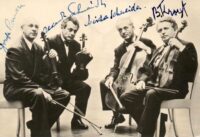
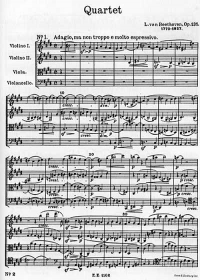
“Did you ever get to perform the Fritz Kreisler String Quartet?”  I’ve been asked this question again and again over the years, undoubtedly in response to a scene in “High Fidelity,” the 1987 documentary about our Guarneri String Quartet. In that scene, I bring the Kreisler String Quartet in A Minor, a work I dearly love, to our quartet’s regular reading sessions of music we might consider for future programs. As we play through the Quartet, it becomes increasingly clear that my colleagues, John Dalley, Michael Tree, and David Soyer, are underwhelmed by Kreisler’s music. Despite my impassioned defense of the Quartet’s virtues, it’s voted down. Some of the comments:  “too long,” “one big first violin solo,” “not one of Kreisler’s stronger works.” The most stinging criticisms, however, come from our famously opinionated cellist, David Soyer, who caps his displeasure by dubbing a passage in the Quartet’s last movement, “Chinese monkey business.” Kreisler had used the pentatonic scale, a basic element of Chinese music, and all the rage with some early twentieth-century Western composers, when his Quartet came to life in 1922.

I saw “High Fidelity” in a movie theatre when it was first released. While the Kreisler Quartet was being handed its death sentence by John, Michael, and Dave, the camera zoomed in on my face. It looked as though I was about to burst into tears. The audience responded by emitting in almost perfect unison a long, drawn out “Aw.”

Yes, I was disappointed not to look forward to a Guarneri Quartet performance of the Kreisler, but that was the nature of those reading sessions. Time and time again, one of us would bring in a favorite work, only to have it dismissed by the majority. What truly bothered me though was my inability to convince the guys of the Kreisler Quartet’s beauty and originality. Why couldn’t they love the work as I did?

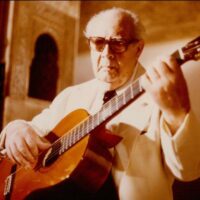
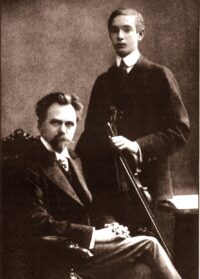
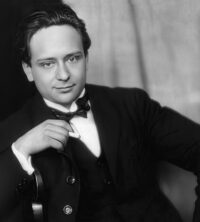
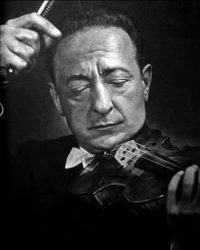
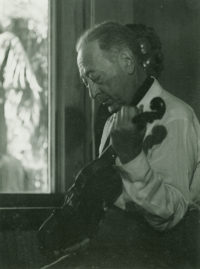
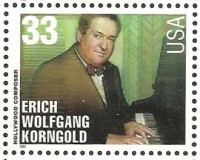
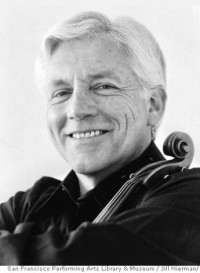
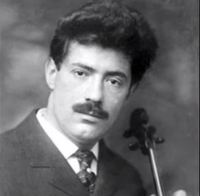
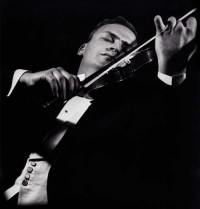
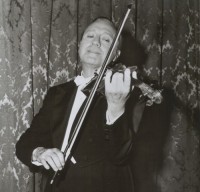
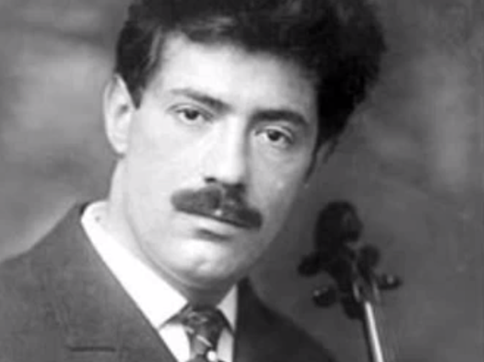
Fritz Kreisler, one of the reigning violinists of his era (born February 2, 1875 in Vienna, Austria, died 1962 in New York City), was also a highly successful composer of works for violin. Some of his compositions showcase the charm and seductive sentiment of his beloved turn-of-the-century Vienna while others venture back in time to pay homage to past eras. Kreisler’s music continues to be performed today, a tribute to his exceptional gifts as a composer, but almost all of it is modest in scope and length, and therefore most often relegated to the lighter end of a program or played as an encore. Kreisler’s String Quartet, his only one in that medium, is a full-length, four-movement work that strives for substance and seriousness beyond the lilting beauty of his slighter offerings.

The audience at “High Fidelity’s” first showing need not have felt sorry for me. I’ve performed Kreisler’s String Quartet often both before and after our Guarneri reading session. As one of four students, I first studied the work with renowned violinist Josef Gingold, who worshipped Kreisler as a violinist, composer, and human being. One day, after we had studied quartet repertoire by such giants as Mozart, Beethoven, and Ravel with Gingold, he brought the Kreisler to us as you would offer a rare wildflower to be handled with care and reverence.

Gingold’s feelings for Kreisler are captured in a speech he gave at the Kreisler Centennial Concert at Indiana University on February 2, 1975:

“Those of us who have heard Kreisler in concert will never forget his sublime artistry. His tone was bewitching; his overall mastery of the fingerboard, his incisive rhythmic pulse, his charm and great musicianship will live forever in our memory. Over a period of 20 years I never missed a Kreisler concert if possible and I always came away from his concerts ecstatic. When he made his stage entrance, his majestic bearing demanded attention even before he played a single note. However, once he put the violin under his chin he was completely transformed. A certainty, modesty, and humility were evidenced as he seemed to say, “I would love to play for you.”  I felt that Kreisler played personally for each listener in his audience, so personable was his magnetism.

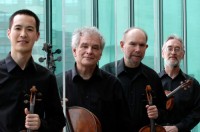
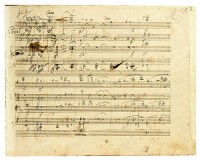
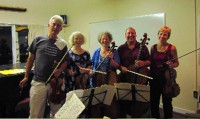
Last summer, Ida Kavafian and I, violins, Steve Tenenbom, viola, and Peter Wiley, cello, performed Kreisler’s String Quartet at the Santa Fe Music Festival. Our rehearsals were aided by markings in traditional Italian that Kreisler had placed in the score, but also by a host of much more personal descriptions that he had added in his native German. Some of them covered a range of emotions that translate as Impetuous, Passionate, Inward, Heartfelt, Painful, Transfigured, and Chivalrous.

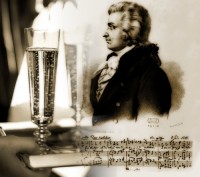
One marking especially caught my attention. At the beginning of the quartet’s last movement, the first violin plays three drawn-out notes that leap up to another like a champagne cork bursting from its bottle. Kreisler wrote the word “Schalkhaft” over these notes. I asked Dorothea, my German-born wife, and her German-speaking friend, Katrin, what the word meant. Dorothea and Katrin looked at one another and smiled. Such an old-fashioned word, they exclaimed, yet the two had trouble coming up with a translation. Finally, I retrieved an answer from my English-German dictionary: Roguish. Waggish.

What kind of man was this Kreisler who composed music that asked for gestures as quirky as ”waggish,” as old-fashioned as ”chivalrous,” and as commonplace as ”passionate” and ”heartfelt”?

Kreisler received a full and richly diverse musical education. He studied harmony with Anton Bruckner and violin with Joseph Massart, teacher of virtuoso violinist Henryk Wieniawski. He knew Johannes Brahms and Joseph Joachim, heard Pablo Sarasate and Anton Rubinstein. When he was in the Vienna Conservatory, he listened to old-timers who still talked of hearing Paganini in 1826, Chopin in 1828, and Jenny Lind in 1849. And as an adult he had lived no musician’s ivory-tower life. Kreisler fought in the First World War, was wounded, witnessed the death of many of his comrades, and wrote a book afterwards, Four Weeks in the Trenches: The War Story of a Violinist. Somehow, this brush with death seemed not to affect his basic sunny nature or the character of his compositions.   Kreisler served up even the darker qualities of his String Quartet as fleeting states of mind in an otherwise benign musical world.

At the Santa Fe performance, Ida, Steve, Peter, and I swooned over Kreisler’s exotic harmonies, smiled at his playfulness, and were moved over and over again by the music’s depth of feeling. As the last notes of the work played themselves out ever more quietly, Kreisler’s marking  “like a distant memory,” seemed to serve not only as musical instruction but also as his melancholy reflection on a place and time that he so dearly loved but that no longer existed.

I hope John and Michael, my old buddies in the Guarneri String Quartet, have by now warmed to the Kreisler’s Quartet. Unfortunately, David Soyer is no longer with us. I try to imagine Dave running into Fritz in Heaven.

“So, Mr. Soyer,” Kreisler says, smiling avuncularly, “I understand you don’t like my string quartet.”  Dave, curmudgeon that he is, merely shrugs his shoulders.

“And what about that ‘Chinese monkey business’ I hear so much about,”  Kreisler continues. Dave shrugs his shoulders again.

Josef Gingold, the person who so lovingly introduced me to the Kreisler Quartet, arrives on the scene at this moment and quickly appraises the situation. He whispers something in Kreisler’s ear. Kreisler nods, takes up his violin, and begins to play one passage after another from the Quartet for Dave. Out comes that bewitching tone, the incisive rhythmic pulse, the charm and great musicianship that Gingold adored and that holds me in thrall every time I listen to Kreisler on record. Dave is inevitably swept away by Kreisler’s playing but also by the beauty of his String Quartet. And since I am the writer and director of this imaginary little story set in Heaven, allow me this last bit of dialogue:

“What was your favorite part, Mr. Soyer?” Kreisler enquires.

Dave responds without hesitation:  “Why, that Chinese monkey business section, of course.”

Posted today, February 2, 2013, Fritz Kreisler’s birthday.
Happy birthday, Mr. Kreisler.
jniNETA36Us_220

Share this Story

Comments

  1. From sally on February 2, 2013

    Many of us in Bloomington heard Mr. Gingold perform the A Minor Quartet…..and many times his solo performances of Kreisler……and experienced his love for this man. And maybe a heard a story or two from Mr. Gingold about his stand partner in Cleveland, for whom he also had great admiration.

  2. From Joe Frame on February 2, 2013

    A wonderful article – thanks so much! I always enjoy watching your documentary; particlarly that section.

  3. From Mimi Bravar on February 2, 2013

    A beautiful essay, Arnold-lovely and poignant like so much of his music. Thank you.

  4. From John Van Buskirk on February 3, 2013

    ah …. what a great story and so sweetly delivered!
    Thank you

  5. From Hava Beller on February 3, 2013

    A beautifully written story. Fascinating. An eye opener.
    The passion for the music is palpable, uplifting. Loved the meeting in Haven. Hilarious!
    You are such a good story taller.
    Looking forward to more.

  6. From Lea Wilds on February 3, 2013

    What a pleasure to read this story! You are the finest write on music that I know of, and I’ll keep looking for more.

  7. From Sheila Fiekowsky on February 3, 2013

    I have been reading your entries and enjoying them so much. The story about Kreisler , Soyer and Gingold was especially wonderful. I remember being introduced to the Haydn sunrise quartet exactly the same way by Mr Gingold when I was 13.

  8. From Theresa on February 4, 2013

    Thanks for your story, as always, Mr Steinhardt! You played the Kreisler quartet in Portland, Oregon the year before, and I loved it. I’ve been seeking a CD of it since then. Please keep writing, as I look forward to your stories eagerly!

  9. From Lien on February 4, 2013

    Thank you Mr. Steinhardt for the wonderful and charming story. I love you writing! i have listened and like Fritz Kreisler’s playing but never heard his string quartet. Have to check it out. Best regards, lien.

  10. From Nan on February 5, 2013

    Oh Arnold, this is an exquisite story. I have had little sense of Fritz Kreisler, and tonight he is my new hero. Thanks for your wonderful stories.

  11. From marigold on February 7, 2013

    This is so good, almost Heaven itself…Let it in…

  12. From Ron Ephrat on March 5, 2013

    my favorite spot is the last message{musical} in the piece which is needless to say is kept for the viola!!
    The way W.Primrose plays it on the famous recording{with F.Kreisler himself} is like sounds from heaven.

  13. From Nancy Virkhaus on March 18, 2013

    What a blessing that, after so many years of enjoying your recordings, I was able to hear the Guarneri quartet perform in Huntsville AL in your final year. After the first movement, my husband and I turned to each other and whispered simultaneously, “They play as one man!”
    I wonder how many other talents you possesses? You not only plays like a god, but write so wonderfully. Your prose sounds effortless and always delights.
    Thank you, thank you!

Leave a Comment

Subscribe

Sign up to receive new stories straight to your inbox!
Story Index

Suzy

May 1, 2013

Suzy

Who is more important, the composer or the performer? Or are they like Siamese twins who simply cannot get along without one another?

Thou Shalt Not Steal

April 1, 2013

A Bible Story

Stealing is wrong. You know it. I know it. Or did I?

Arnold Steinhardt

March 4, 2013

Gibbsy

There are a few so-called left-handed violinists. Personally, I have to use both hands to play the violin, but maybe I’m just not talented.

fritz

February 2, 2013

Fritz Kreisler

What happens when four people in a string quartet can’t agree on how to play a musical phrase or even on the merit of an entire work? The great violinist and distinguished composer, Fritz Kreisler, presented the Guarneri String Quartet with just that problem.

The Interview

December 28, 2012

The Interview

Giving interviews is something musicians have to do surprisingly often. But no matter how much I improve my interview skills, they will always be mediocre in comparison with those of a fellow musician I once met.

The Juilliard String Quartet (from left)—Joseph Lin, Joel Krosnick, Samuel Rhodes, and Ronald Copes

November 22, 2012

An Open Letter to Sammy Rhodes

You think quitting smoking is hard? Try quitting a string quartet. My 4-step program might just help Sammy Rhodes quit the Juilliard String Quartet.

cJQuZXoyc5U

September 7, 2012

A Night to Remember

Have you ever heard a concert that you will never forget? And have you ever gone out on a blind date with someone famous to thousands except to you? I have, and both events happened on the same night.

Arnold Giving Colbourn Commencement Speech

May 7, 2012

Colburn School Commencement Address

The first time I gave a commencement address, the school folded one week later. I try again at the 2012 Colburn School graduation ceremony.

The Steinhardt String Quartet, Press Poster

April 1, 2012

The Steinhardt String Quartet

The string quartet has been described as a truly democratic group without leaders or followers—a republic of equals. Think again.

Arnold Steinhardt Sixth Grade Class Photo

March 1, 2012

Teach Me!
Mr. Moldrem, my first violin teacher, easily taught baffling rhythms to his students by comparing them to different fruits. He was a shining example of the teacher’s elusive craft.

Jascha Heifetz

February 2, 2012

Jascha

In Jascha Heifetz, the right body, heart, mind, and guidance came together to produce a violinistic miracle.

The Arnold Steinhardt Metronome

January 5, 2012

You’re On Your Own

I have very mixed feelings about the metronome, mainly because it’s so….metronomic. But let me explain.

Meryl Streep as Roberta Guaspari

December 4, 2011

Uh-Oh

Musicians are often compared to actors, but if you’re good as one, should you necessarily be good as the other?

Rock Concert T-shirt

November 1, 2011

Listen

I go to my first rock concert ever with ear plugs in my ears and discover up close why the world’s ears are at risk.

Manuscript of Beethoven's Grosse Fuge

October 3, 2011

Opus 130

How often does a work of music change your life? Ludwig van Beethoven’s String Quartet, Opus 130, changed mine but it took me several years to realize it.

Arnold Steinhardt's Violin Case

September 9, 2011

My Violin Case

It’s just for a violin and bow, right? Wrong.

Rudolf Serkin, pianist, and Arnold Steinhardt, violinist, 1980

August 2, 2011

Marlboro at Sixty

The Marlboro Music School celebrated its sixtieth anniversary last summer. For many of us, it was the most important musical experience of our lives.

Stage F-F-Fright

July 1, 2011

Stage F-F-Fright

An age-old problem has a host of possible solutions including specific practice, meditation, and an unlikely drug.

Del Gesu Beare, Scrolls

June 6, 2011

An Old Friend

The violin I play is my partner and my friend. Such a violin that I’ve not seen in thirty years returns for us to get reacquainted.

Practice, Practice

May 3, 2011

Practice, Practice

Practice makes perfect whether in ballet, tennis, chess, or music. But hours of mindless practice may lead you astray. Enter the master teacher as guide.

The Duo

April 1, 2011

The Duo

An exciting and unusual new chamber music endeavor. Now booking!
A-Meditation-on-the-Meditation_Featured-Image

March 1, 2011

A Meditation on the Meditation

An alluring violin solo in an opera by Jules Massenet acquires a life of its own as a violinistic showcase. Beloved by some, belittled by others, the Meditation has nevertheless remained in the repertoire for over a hundred years.

Forty Year Story

February 3, 2011

Forty Year Story

I was young and inexperienced but I managed to do right by my students. The consequences might surprise you.

Perfect Pitch Tablets from Tone Deaf Comics

January 3, 2011

Perfect What?

So your little genius has perfect pitch. Big deal.

David Soyer

December 6, 2010

Dave

When someone I know dies, I find myself taking inventory almost without realizing it. In David Soyer’s case, I will remember him as a marvelous cellist, an uncommon musician, and as an extraordinary human being.

Paganini's Birthday

October 27, 2010

Paganini’s Birthday

I pay tribute to the great violinist with words, music, and a letter sent to him at his grave in Parma, Italy.

Photo from Opus

October 4, 2010

Opus

Michael Hollander’s play about string quartets explores both this great medium’s pitfalls and its bliss.

Hermes/Mercury, God of Travel

September 6, 2010

Psssst

Open your hearts and minds to the great adventure of getting from point A to point B on firm ground or at 35,000 feet, on time or maddeningly late.

In a Sentimental Mood

August 2, 2010

In a Sentimental Mood

“Sentimental” according to one definition, means having sentiment or feeling but that quality seems to have fallen on hard times. Why are we so uncomfortable with a heart that beats unashamedly on the sleeve?

Dinner Music

July 1, 2010

Dinner Music

A string quartet competes badly with hot dogs, mustard, and relish.

Disney Hall

June 2, 2010

Something New, Something Old

We’re tired of hearing the same old works over and over again, yet unhappy if not downright uncomprehending listening to the very new. Something’s got to give.

Joe Vita

May 4, 2010

Joe Vita

A passion for music appears in an unlikely person and place.

Twelve Note Story

April 23, 2010

Twelve Note Story

Take a deep breath and try to settle down. I know, I know. The task is daunting, but you’ve worked hard. Just be relaxed. Be focused. And now get practical. …

News Alert

March 30, 2010

News Alert

The United States Bureau of Weights and Measures has just announced at a national news conference that chamber music may cause global warming. Read on.

Sophisticated Traveler

February 28, 2010

Sophisticated Traveler

It happened to me. I sure hope it doesn’t happen to you. But it could.

Grammy Award

January 18, 2010

Grammy Awards

It will be an honor just to have been nominated for such a prestigious award, won’t it? Won’t it???

Shall We Dance?

January 4, 2010

Shall We Dance?

I play Bach for an elderly musician who responds by dancing for me and opening up a new world of understanding.

Looking for Work

December 1, 2009

Looking for Work

The Guarneri String Quartet retired, but a guy’s got to do something with the rest of his life.

Birth Pains

November 4, 2009

Birth Pains

Mozart’s String Quartet, K. 421 in D Minor was the very first music the Guarneri String Quartet read through after deciding to form as a group. I can think of two other birth events associated with this emotive work.

The Guarneri Quartet

October 6, 2009

For the Very Last Time

The Guarneri String Quartet says goodbye after forty-five years on the concert stage.

Gray's Papaya

September 1, 2009

Gray’s Papaya

Where a hot dog on a bun with mustard and sauerkraut is undisputed king.

Second Concert

August 3, 2009

Second Concert

Musicians usually perform for the well-heeled members of society but I unexpectedly play for an audience of homeless people — with moving results.

Arthur Rubinstein

July 7, 2009

Really

“I just loved your playing”, he said at the end of the concert. But did he mean it?

Life, Death, Music

June 13, 2009

Life, Death, Music

A teenager I’ve never met before sets in motion a story of life, death, and the enormous power of music.

Almost on the Riviera

May 11, 2009

Almost on the Riviera

I audition for a movie role as a violinist. So close to stardom, yet so far.

The Abode

April 1, 2009

The Abode

Where do chamber music players go when they retire from concertizing? Here’s your answer.

Yehudi Menuhin

March 5, 2009

Genie in a Bottle

I record, therefore I am at your service at any hour of the day, every day of the year, for eternity.

A Brush with Fame

February 8, 2009

The Brush With Fame

For mere seconds, a crooner, an actress, and a violin student come together in unlikely fashion.

New Years Thoughts

January 1, 2009

New Year’s Thoughts

Some comments from the Guarneri String Quartet’s listeners on the eve of its retirement.

The Swan

December 1, 2008

The Swan

One of the most alluring melodies ever written for the cello. So sweet, so simple. Well, not exactly.

Mr. Oliver

November 10, 2008

Mr. Oliver

A music teacher in danger of losing his job prompts his class to write a letter of support with unimagined short- and long-term consequences.

Tooth Talk

October 8, 2008

Tooth Talk

It’s not food, it’s not a roof over your head, and it’s not procreation. So what exactly is music good for?

What Good is Music

September 11, 2008

What Good is Music?

It’s not food, it’s not a roof over your head, and it’s not procreation. So what exactly is music good for?

A Tale of Three Violinists

August 10, 2008

A Tale of Three Violinists

When one young, one old, and one truly terrible violinist meet, ignorance, greatness, and comedy reign all at once.

Last Words to a Son

July 11, 2008

Last Words to a Son

My mother gives me a compliment just before leaving this earth at 101 years of age.

A Dog's Tale

June 12, 2008

A Dog’s Tale

I’m such a wonderful teacher. You don’t believe me, do you? Let me show you why.

Remembering Izzy

May 10, 2008

Remembering Izzy

Isidore Cohen, a distinguished violinist, is remembered and honored in a most unusual way years after his passing.

A Noteworthy Day

March 2, 2008

A Noteworthy Day

Sounds. They’re everywhere. Who is responsible for them? And I’m not talking about music.

Solo Bow

February 2, 2008

Solo Bow

Perhaps I shouldn’t have read those program notes about Beethoven’s String Quartet Opus 18 #5 before we, the Guarneri Quartet, walked out onto the stage to perform it.

In the Key of Strawberry

January 1, 2008

In the Key of Strawberry

The Talmud says that a dream not understood is like a letter unopened. A search for the meaning of my strange dream comes up with surprising results.

Hiroshi Iizuka

December 1, 2007

Cousin Sam

There are large foundations and small foundations. Then there is my cousin Sam whose generosity proved contagious.